
–Aniket Rout,
Trainee Associate,
Sensato Legal
On 17 March 2026, the CAF Appeals Board set aside the result of the AFCON final nearly two months after its conclusion on the field of play and awarded the title to Morocco. Decisions of this nature are rare in international football and raise fundamental questions concerning the limits of disciplinary jurisdiction, the operation of forfeiture provisions, and the protection afforded to refereeing decisions under the Field of Play Doctrine. With the Senegalese Football Federation (FSF) confirming an appeal to the Court of Arbitration for Sport (CAS), this article examines the principal legal issues and the likely approach of CAS.
A. Background
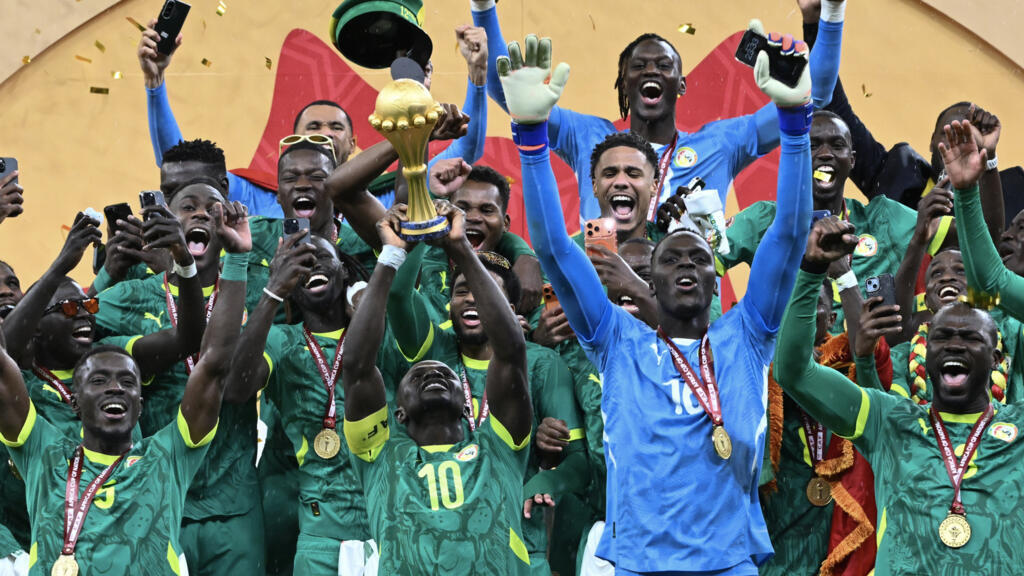
The AFCON 2025 final was played on 18 January 2026 in Rabat between hosts Morocco and defending champions Senegal. In the closing minutes of regulation time, following a VAR review of a challenge by El Hadji Malick Diouf on Morocco forward Brahim Diaz, referee Jean-Jacques Ndala Ngambo awarded Morocco a penalty. The Senegalese players and coaching staff subsequently withdrew from the field of play without authorisation and retreated towards the dressing rooms. After a suspension of approximately fifteen minutes, the players returned, the penalty was taken, and the match progressed to extra time, where Pape Gueye scored the winning goal for Senegal.
Morocco lodged a formal protest with CAF shortly after the final, arguing that Senegal’s walkout constituted a breach of Article 82 of the AFCON Regulations, which provides that a team leaving the ground before the regular end of a match without the referee’s authorisation shall be considered to have lost the match, thereby triggering the forfeiture consequence prescribed under Article 84. On 28 January 2026, the CAF Disciplinary Board issued its first-instance decision. The Disciplinary Board held that the walkout constituted unsporting conduct warranting sanction. However, as the match was ultimately completed under the referee’s authority, it found that Article 82 and the forfeiture consequence under Article 84 were not engaged The Disciplinary Board imposed aggregate financial penalties exceeding one million dollars across both federations, suspended head coach Thiaw for five official matches, and dismissed Morocco’s protest on the question of the result.[1]
Morocco subsequently filed an appeal, with the Appeals Board admitting it on the procedural basis that Morocco’s right to be heard had not been adequately respected during the initial proceedings, thereby opening the matter to full reassessment. At the appeals stage, Morocco maintained that the walkout constituted a complete and unequivocal withdrawal under Article 82, triggering the automatic application of Article 84 irrespective of the eventual resumption, while Senegal contended that the referee’s decision to allow the match to continue was conclusive and placed the matter beyond the reach of CAF’s disciplinary bodies.
On 17 March 2026, the CAF Appeals Board issued its ruling. It set aside the Disciplinary Board’s decision, upheld Morocco’s protest, and found that Senegal’s conduct fell squarely within the scope of Articles 82 and 84 of the AFCON Regulations. The match result was formally recorded as a 3-0 victory in Morocco’s favour, with Senegal declared to have forfeited. The Appeals Board reasoned that the physical withdrawal from the field constituted a breach of Article 82, triggering the mandatory forfeiture consequence under Article 84, and that this consequence operated independently of the referee’s subsequent decision to resume play[2] The FSF publicly rejected the decision, with federation president Abdoulaye Fall declaring that Senegal would “legitimately defend this victory on the field”. The FSF confirmed it had instructed lawyers to file an appeal before CAS in Lausanne, which is the subject of the analysis that follows.[3]
B. Senegal’s Appeal: Principal Grounds
The first, and strongest, is the Field of Play Doctrine. Senegal’s position is that referee Jean-Jacques Ndala Ngambo made a field-of-play decision when he chose to allow the match to continue upon the players’ return. Under Law 5 of the IFAB Laws of the Game, the referee’s decisions on matters connected with play are final.[4] When Senegal’s players walked off, Ndala had an unambiguous choice; he could have abandoned the match and declared a forfeit or allowed the game to resume. He chose the latter and eventually play restarted. The penalty was taken, extra time was played in full, and the result was determined on the pitch. As the FSF put it: “The referee exercised his discretionary power by opting for a temporary suspension and not a definitive abandonment.”[5] By retrospectively reclassifying a completed match as a forfeiture, CAF effectively displaced a decision taken on the field of play, which is precisely what the doctrine seeks to prevent.
The second pillar is a textual argument about the scope of Article 84 of the AFCON Regulations. Sitting CAS arbitrator Raymond Hack, former CEO of SAFA and FIFA Disciplinary Committee member, has publicly stated that the CAF Appeals Board misapplied its own regulations.[6] Article 84 does not operate as a standalone provision; it prescribes the forfeiture consequence only where a team has contravened both Article 82, which concerns leaving the field without the referee’s authorisation, and Article 83, which concerns a team’s failure to be present on the ground and ready to play at the scheduled time.[7] Senegal may have contravened Article 82 by temporarily withdrawing from the field, but they returned before the match resumed, completed the penalty, and played the full duration of extra time. A breach of Article 83 was therefore factually impossible on these facts. On a strict textual reading, the conditions precedent to the application of Article 84 were not satisfied, and the forfeiture consequence was not available to the Appeals Board.
The third argument concerns proportionality and procedural consistency. CAS retains jurisdiction to review whether a sanction is proportionate to the conduct in question, and the benchmark set by comparable incidents in international football, where crowd interference and laser attacks on goalkeepers have attracted financial penalties rather than forfeiture, is relevant to that assessment. On procedural consistency, the fact that the Appeals Board imposed the most severe available sanction in circumstances where the first-instance body had expressly declined to do so on the same facts is a matter CAS is likely to scrutinise, particularly given its tendency to examine appellate bodies that materially increase the severity of a sanction on appeal without a clear legal basis for doing so.
C. A Directly Analogous CAS Award: Espérance de Tunis v. Wydad Casablanca
The most directly analogous precedent arises from the 2019 CAF Champions League final between Espérance de Tunis and Wydad Casablanca, a dispute that generated two separate CAS rulings and is relevant to the present matter in distinct and opposing respects. The critical issue is not the walkout itself, but whether the match was completed.
In the second leg of that final, Wydad refused to resume play following the disallowance of a goal and a malfunction of the VAR system. The referee declared the match a forfeit and awarded it to Espérance. CAF’s Executive Committee subsequently overruled the referee and ordered a replay. CAS annulled that decision, finding that CAF’s executive body had no authority under its own regulations to substitute its judgment for that of the referee and order a fresh match.[8] CAF was directed to refer the matter to its proper disciplinary structures, which duly confirmed the forfeit. When Wydad took that decision to CAS in a second appeal, CAS dismissed it in full, finding that the players’ refusal to resume play constituted an abandonment under the applicable CAF Disciplinary Code and that the forfeit had been correctly imposed.[9]
The precedent therefore does not assist Senegal uniformly. The first CAS ruling supports the proposition that CAF’s governing bodies may not override a referee’s decision in a manner inconsistent with the applicable regulations. However, the second CAS ruling, confirming that a walkout constitutes an abandonment warranting forfeiture under CAF’s disciplinary framework, is a finding CAF may rely upon in the present proceedings. The decisive distinction is that, in Wydad, the players did not return and the match was not completed. In the present case, play resumed and the match was concluded under the referee’s authority.
D. Broader CAS Jurisprudence: The Field of Play Doctrine in Practice
Beyond Espérance, the Field of Play Doctrine is one of the most robustly settled principles in CAS jurisprudence. In CAS 2015/A/4208 Horse Sport Ireland & Cian O’Connor v. FEI, the panel articulated the standard formulation: CAS arbitrators do not review determinations made on the playing field by match officials, as they are not positioned to second-guess in-the-moment decisions made under pressure. A field-of-play decision can only be reviewed if there is direct evidence of bad faith, fraud, or corruption, and not mere error.[10]
The practical significance of this principle in the present context is considerable. Senegal is not asking CAS to reverse a refereeing call. They are doing the opposite: asking CAS to protect a field-of-play decision, specifically the referee’s choice to resume the game, from post-hoc interference by a governing body. This is a position CAS has historically been willing to support.
E. Assessment and Likely Outcome
On the merits, Senegal’s case is well-founded across each of the three grounds identified above, though it is not without complexity.
The Field of Play Doctrine argument is the strongest of the three. The principle established in Horse Sport Ireland and consistently applied in CAS jurisprudence is that a referee’s decision on the field of play is sovereign and cannot be retrospectively overridden by a governing body. Senegal’s central submission, that the referee’s choice to allow the match to resume was itself a field-of-play decision that resolved the abandonment question on the day, is well-supported by that line of authority. The textual argument on Article 84 further strengthens this position: if the conditions precedent to the forfeiture consequence were not satisfied, the Appeals Board’s ruling was not available on the facts regardless of how the Field of Play Doctrine is applied.
The adverse element of the Espérance proceedings must however be candidly acknowledged. The second CAS ruling in that dispute confirmed that a walkout constitutes abandonment warranting forfeiture under CAF’s disciplinary framework, and CAF will rely on this in the present proceedings. Senegal’s answer to that ruling is factually specific and must be clearly articulated: in the Wydad case, the players never returned, and the match was never completed. In the present case, the players returned, the penalty was taken, and extra time was played in full under the referee’s authority. It is that resumption, sanctioned by the referee, that Senegal will argue distinguishes the present facts from those in Wydad and takes the matter outside the scope of the abandonment finding in that ruling.
CAF’s countervailing argument, that its regulations plainly prohibit what Senegal did and that CAS should respect the disciplinary autonomy of a sports federation, is not trivial. CAS does afford deference to federations in interpreting their own rules. However, that deference has clear limits where the interpretation adopted contradicts established lex sportiva, and the Field of Play Doctrine represents precisely that kind of settled principle.
On the question of remedy, CAS has full authority under Rule R57 of the CAS Code to issue a new decision in substitution for that of the Appeals Board and is not confined to annulling the decision and remanding the matter to CAF. In a dispute where the facts are largely undisputed and the central questions are ones of regulatory interpretation and legal principle, a direct ruling on the merits is the more probable course if CAS finds in Senegal’s favour.
The central issue is whether a match completed under the referee’s authority can be retrospectively converted into a forfeiture. If CAS answers that question in the negative, it will reaffirm a foundational principle of sports law: that decisions taken on the field of play are not to be displaced after the event, absent exceptional circumstances.
[1] Gab Marcotti, ‘Making Morocco AFCON Champions Was Correct, but Why Did CAF Take So Long?’ (ESPN, 18 March 2026) <https://www.espn.in/football/story/_/id/48235532/morocco-afcon-champions-senegal-caf-appeal-right-decision-wrong-process\> accessed 22 March 2026.
[2] Confederation of African Football, ‘CAF Appeal Board Media Statement’ (CAF Online, 17 March 2026) <https://www.cafonline.com/news/caf-appeal-board-media-statement/\> accessed 21 March 2026.
[3] ‘Senegal Instruct Lawyers, While CAF’s Motsepe Defends Morocco’s AFCON Award’ (Al Jazeera, 19 March 2026) <https://www.aljazeera.com/sports/2026/3/19/senegal-instruct-lawyers-while-cafs-motsepe-defends-moroccos-afcon-award\> accessed 21 March 2026.
[4] International Football Association Board, ‘Law 5 – The Referee: The Authority of the Referee’ (Laws of the Game, 2024/25) <https://www.theifab.com/laws/latest/the-referee/#the-authority-of-the-referee\> accessed 20 March 2026.
[5] ‘How Senegal Lost Their AFCON Title to Morocco and What Next – All to Know’ (Al Jazeera, 18 March 2026) <https://www.aljazeera.com/sports/2026/3/18/how-senegals-afcon-win-was-awarded-to-morocco-and-what-next-all-to-know\> accessed 21 March 2026.
[6] Leonard Solms, ‘CAS Arbitrator Raymond Hack Says Court Could Likely Rule in Senegal’s Favour in AFCON Final Appeal’ (ESPN, 18 March 2026) <https://www.espn.in/espn/story/_/id/48238224/cas-arbitrator-raymond-hack-says-court-likely-rule-senegal-favour-afcon-final-appeal\> accessed 20 March 2026.
[7] Confederation of African Football, TotalEnergies Africa Cup of Nations 2025 – Competition Regulations (CAF 2024) art 82, 83, 84 <https://www.cafonline.com/media/bl2lhb3v/bm58fa2qjh76asriri5s.pdf\> accessed 22 March 2026.
[8] Espérance Sportive de Tunis v Confédération Africaine de Football (CAF) & Wydad Athletic Club TAS 2019/A/6336; Wydad Athletic Club v Confédération Africaine de Football (CAF) TAS 2019/A/6338, Award of 7 July 2020.
[9] Wydad Athletic Club v Confédération Africaine de Football (CAF) & Espérance Sportive de Tunis CAS 2019/A/6483, Award of 18 September 2020.
[10] Horse Sport Ireland (HSI) & Cian O’Connor v Fédération Equestre Internationale (FEI) CAS 2015/A/4208, Award of 4 January 2016 <https://inside.fei.org/system/files/CAS%20Decision%20-%20HSI%20%26%20Cian%20O%20Connor%20v%20FEI.pdf\> accessed 22 March 2026.
Lorem ipsum dolor sit amet, consectetur adipiscing elit. Ut elit tellus, luctus nec ullamcorper mattis, pulvinar dapibus leo.